What Is Sorority Recruitment — And What Actually Happens?
If you've signed up for sorority recruitment, here's what actually happens, from the first lineup to Bid Day.
Updated 7/3/2026
From our Sorority Recruitment Guide.
In this post: Your Recruitment Counselor | Open House | Philanthropy | Sisterhood and House Tours | Preference Round | Bid Day
What Is Formal Sorority Recruitment?
Formal sorority recruitment is a structured, multi-day process run by your school's College Panhellenic Council (CPC), often abbreviated as Panhellenic. It's how National Panhellenic Conference (NPC) sororities add new members, and it's designed to introduce as many Potential New Members (PNMs) to as many sorority chapters as possible.
The process includes three or four rounds, which are just stages in the process. During a round, each chapter hosts parties to meet PNMs. A round might take place in one day or be spread over several, depending on how many PNMs are participating. Most campuses use Fully Structured Recruitment (FSR), which follows the round structure described above. Some campuses use Partially Structured Recruitment (PSR) instead, a more flexible format with fewer formal requirements.
In the first round, PNMs meet every chapter and in subsequent rounds there are limits on how many parties each PNM can attend, and the number decreases each round. A campus with 6 sororities would do three rounds starting with 6 parties in Round 1, then down to 4 for Round 2, and 2 for Pref round (the last round). On a campus with 13 sororities, they might have 4 rounds that narrow from something like 13 > 10 > 6 > 2. The exact numbers are set by Release Figure Methodology (RFM), the system that controls how many invitations each PNM can receive each round.
After each round, chapters decide who to invite back and PNMs rank the chapters they want to return to; those two sets of preferences are combined to build your next round schedule. After the last round, chapters extend bids and PNMs officially become new members.
Before any of this happens, recruitment kicks off months earlier when students apply to participate in their school's sorority recruitment. Here's a full walkthrough of how to apply for sorority recruitment.
Your Recruitment Counselor
When recruitment begins, you'll be assigned to a group with other PNMs and the group will have one or two recruitment counselors (often called a Rho Chi, Gamma Chi, or Pi Chi, it varies by school). She's a sorority member who has temporarily disaffiliated from her sorority for the recruitment period and is there to support and advise you. Whatever she's called, she knows the rules and schedule, can answer logistical questions, and is your point of contact if anything comes up.
She's not evaluating you and she's not steering you toward a specific chapter. Her role is to help you navigate the process and make your own decisions.
In Round 1, your PNM group will visit each chapter together. After that, everyone's schedule is different based on which chapters invited them back. We go deeper on what a Rho Chi actually does in a separate post.
The Lineup
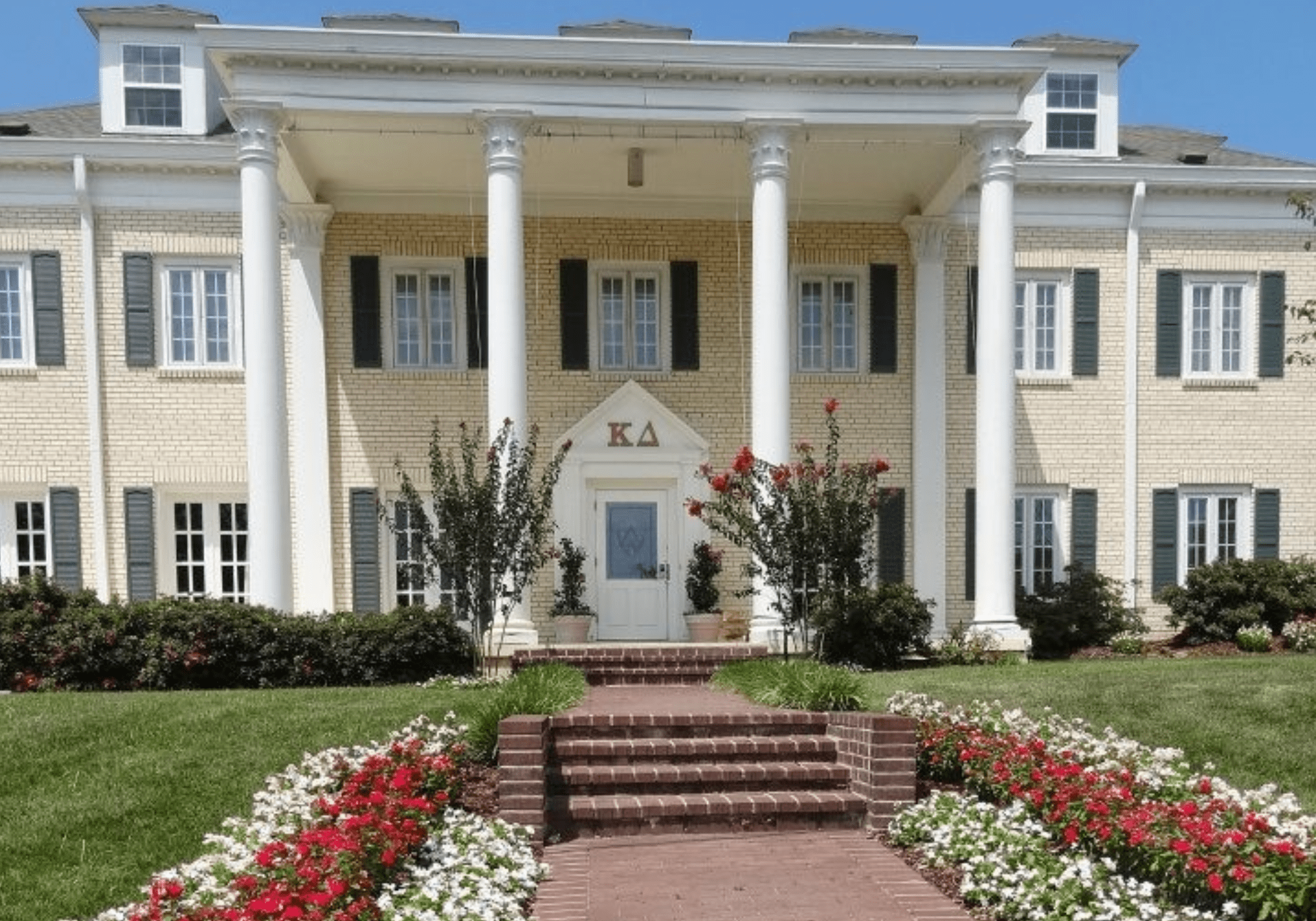
Before each party, PNMs line up outside of the house, usually alphabetically. You'll hear singing and clapping from inside while you wait. When the doors open, you'll be greeted and walked in by a member who was matched to you ahead of time (based on things like your major, hometown, interests, or mutuals).
It's not always at a house: some chapters don't have houses, some chapters have houses but use a bigger space for recruitment parties, and some schools have all chapters use a campus building to keep things on an even playing field and to make it easier for PNMs to get around.
Round 1: Open House (or Values)
This is the largest round with the most parties and it's in person at most schools. Here's what to expect.
When you walk in, you might have a short conversation with your recruiter while everyone else is still filing in, if you can hear over the singing. If your last name starts with A, you'll have the most time; if it's a late letter, things can move fast. Then the chapter president or VP of Membership Recruitment may give a welcome speech, or there may be a video introducing the sorority's values and traditions. This part is more about giving you a feel for the chapter than having a real conversation. After that, you'll go back to talking with your recruiter for a short time; every party runs on a tight schedule.
Then you'll probably be introduced to another recruiter and your first recruiter will excuse herself and go meet another PNM. This is called bumping. Some transitions are smooth. Some are not. If a conversation ends a little abruptly, don't take it personally. In Round 1, you'll typically meet around three members per chapter.
Two other things that can happen:
Hotboxing is when two members recruit the same PNM at the same time, either because a bump handoff failed, or intentionally because the chapter really wants to make sure a particular PNM feels seen. Hotboxing doesn't happen often, but if it happens to you, it's usually a sign the chapter is very interested.
Double Sitting or Double Dipping is when there are more PNMs than recruiters in the room, so 2 or even 3 PNMs meet with the same recruiter simultaneously, not ideal.
When it's time to go, it will likely feel a bit rushed and you'll get another round of singing and clapping.
Anyone who misses doorstack sendoffs: the iconic tradition of stacking an entire doorway with chapter members was officially banned by NPC in 2023 due to injuries.
Right after each visit, grab your things and take a few quick voice notes or jot something down while the conversation is still fresh. It's helpful to note what the party looked like or anything specific about the decor or what your recruiters were wearing because it's easier to associate a conversation to a particular party if you can picture the scene. After a few parties, it's hard to remember who you met where and what you liked about a chapter so don't wait until you get home. Most important: capture your recruiters' names so you can recognize them in the next round.
There's no food at the parties and there may not be a lunch break, so plan ahead. The Starbucks line on recruitment mornings is unreal, and you may not have time to grab anything later, so pack snacks. You won't want to use the restroom at a party, but there will be designated rest areas near where the parties are taking place.
Once a round is complete, chapters go through a membership selection process to develop a list of which PNMs they're inviting back and PNMs rank where they want to return; both submit to Panhellenic, usually via CampusDirector (the same platform PNMs used to apply).
Round 2: Philanthropy Round
In Round 1, PNMs visited every sorority with their group, but Round 2 schedules are based on which chapters invited them back, so every PNM's schedule is different. You'll receive your schedule the night before or early the morning of Round 2. You might have a full back-to-back schedule or you might not have the maximum invitations, which can result in gaps.
Not having a full schedule is normal and doesn't mean anything went "wrong."
If your school has 3 rounds of recruitment, this is your Round 1 and you'll meet every sorority.
Your recruitment counselor isn't escorting you in this round, so there are usually a few stationed outside every party to line up PNMs and help with any questions or issues.
Philanthropy Round plays out much like Open House, with a focus on each chapter's national philanthropy: what they support, how they raise money, and why it matters to the membership. Often there's time for one member/PNM matchup, then a video or speaker, then back to bumping and meeting more members. Conversations will be a little longer than they were in Round 1.
After this round, there's another cycle of ranking and membership selection (called mutual selection).
Round 3: Sisterhood Round
As in Round 2, you might have a full schedule or not.
Because there are fewer parties this round, they're longer and there should be more opportunity for real conversations with members and a genuine sense of where you feel most comfortable. Members often give speeches about their big/little relationship or a meaningful way that membership has impacted their lives.
If the round includes house tours, members will take PNMs around the house to show off living quarters, house amenities, and common areas (we've seen everything from workout rooms to barista-level coffee machines to infrared saunas).
If your school's Panhellenic doesn't publish each sorority's dues ahead of recruitment, Sisterhood Round is when chapters will go over the actual numbers. They do this to make sure you fully understand the financial obligation before you get to Pref.
Another round of mutual selection follows.
Preference Round
Preference Round, "Pref," is the final round before bids, it's usually only 2 parties, and it's special.
The biggest difference between Pref and earlier rounds is that when a chapter invites a PNM to Pref, they commit to extending a bid to that PNM if there's a match (this becomes important during matching).
Pref is typically quieter and more emotional than earlier rounds. Some chapters share personal stories. Some do a candlelight ceremony. PNMs might spend the whole party with a single member or split the time between two, but it's not the same casual bumping as earlier rounds. There are lots of tears and hugging at Pref. PNMs and chapters are fully invested.
After Pref, you'll submit your signed MRABA (Membership Recruitment Acceptance Binding Agreement), the last ranking. Signing means you agree to accept a bid if one is offered. Chapters submit their prioritized bid lists to Panhellenic, and the final matching process runs from there.
The Matching Process
RFM runs after each round, setting how many PNMs each chapter can invite back. After Pref, once MRABAs are signed, bid matching takes over: a separate process that pairs PNMs with chapters to maximize the number of PNMs who receive and accept bids while helping chapters reach quota. It's extremely complicated and includes strict policies to account for a variety of scenarios, including unbalanced PNM preferences, secondary quotas for sophomores, juniors and seniors, snap bids, and suicide bids.
We'll go deeper on how the matching math actually works in a separate post.
Bid Day
Once matching is complete, chapters receive their bid lists before new members find out where they're going. Then bids go out.
How that happens depends on your school. At some schools, bids are delivered to PNMs in their rooms, a private moment before everyone (literally) runs home to their new chapter. At others, all the PNMs who submitted MRABAs report to a set location and there's a countdown to open bids all at once. If you've followed #BamaRush on TikTok, you know what that scene looks like.
If a PNM submitted an MRABA but did not receive a bid, her recruitment counselor will reach out before the reveal. Nobody wants to hear that news in the middle of a crowd.
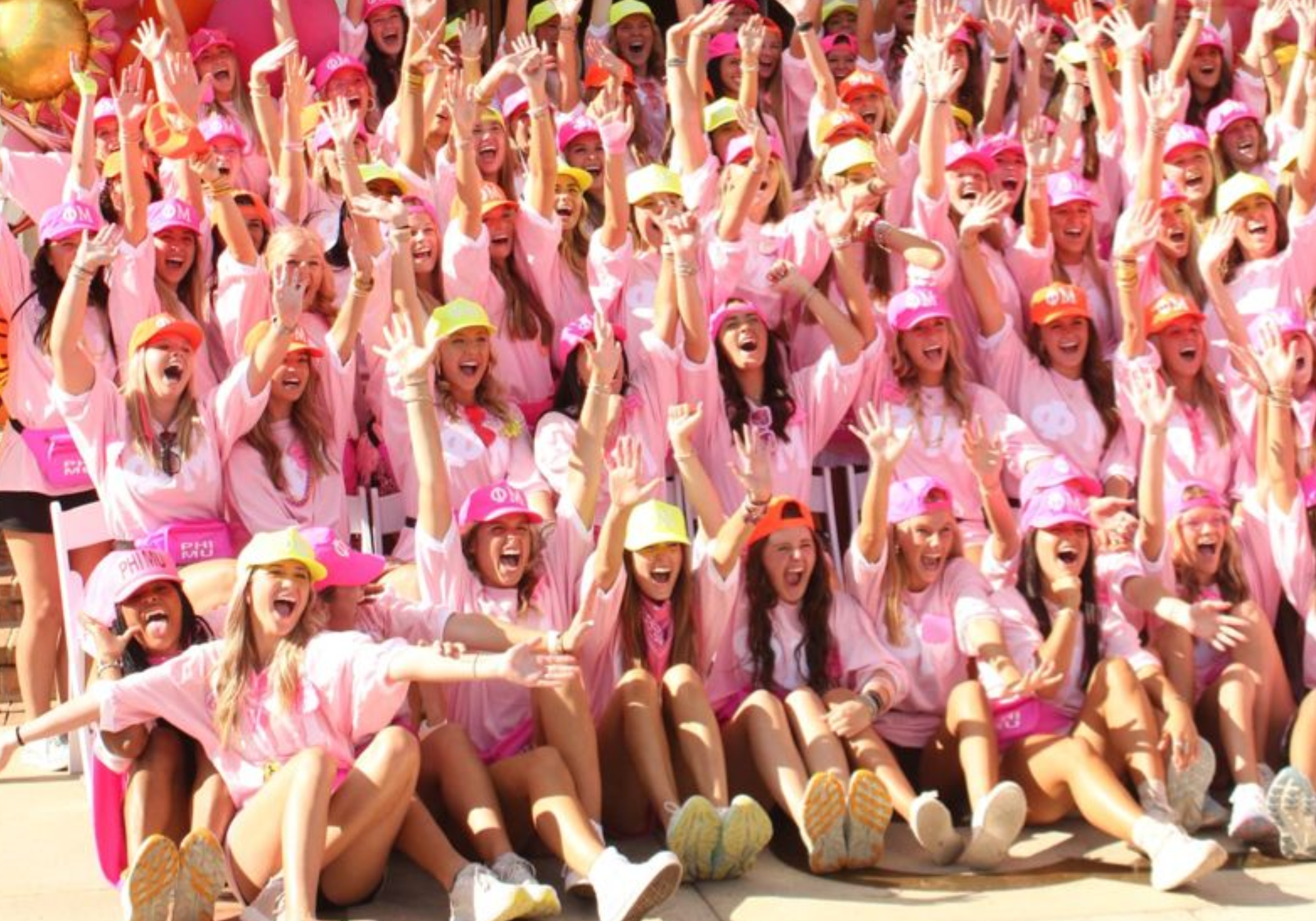
However the news arrives, Bid Day is a full celebration. Members make name signs for their newest sisters, merch gets handed out, and there are a LOT of photos and Insta moments. The parties that follow range from thoughtfully decorated events to elaborate productions: DJs, food trucks, candy tables, facepainting, and more. (Sororities at the University of Arkansas spend as much as $30,000 on balloon installations alone.) Whatever the scale, it's loud, it's chaotic, and the process is officially behind you.
This is the big-picture view of formal recruitment. For a closer look at any single piece of it, our Sorority Recruitment Guide breaks down every round, term, and decision point in detail.
More sorority advice:
→ What's a Rho Chi?
→ How to Stand Out in Recruitment
→ What Not to Say During Recruitment
→ What to Wear for Every Round of Recruitment
→ Sorority Recruitment: A Parents' Guide
And follow @maziandzo on TikTok for real talk about recruitment and sorority life.